

DiagnoDent is a small laser device that helps Dr. Bentler and Dr. Simmons find cavities at their earliest stages — sometimes before they'd even show up on a regular X-ray or be visible to the eye. It's a simple, painless way to catch tooth decay early, when it's easiest to treat.
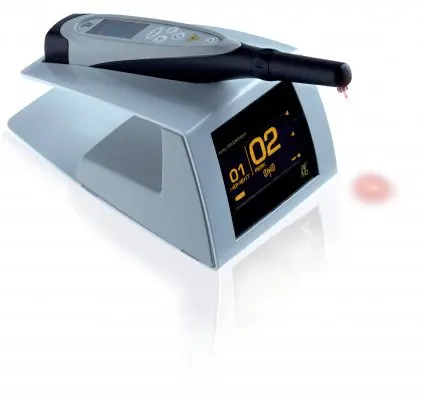
Your dentist gently glides the DiagnoDent tip across the surface of your teeth. The device measures how the tooth reacts to a harmless light and gives a reading that helps identify areas of early decay. There's no discomfort, no radiation, and no preparation needed. It's often used during your regular checkup.

Catches problems sooner. Finding decay early often means a smaller, simpler filling instead of a bigger procedure later.
No radiation. The device uses light, not X-rays, so it can be used as often as needed.
More accurate readings. It can help confirm or clarify what's seen on an X-ray or visual exam.
No. It's a helpful addition to X-rays and a visual exam, not a replacement for them. Your dentist uses all three together to get the clearest picture of your dental health.
Not at all. The device is simply glided over your teeth and uses light, not pressure or heat.
It's a helpful tool for spotting early decay, but like any screening tool, it works best combined with your dentist's exam and judgment rather than on its own.
Not necessarily. Sometimes early decay can be watched and managed with better home care, while other cases may need a small filling. Your dentist will explain your options.
Often, yes. Many patients have it done as part of their routine exam at no extra appointment required, though this can vary based on your needs.
DiagnoDent screening is quick and typically built into your regular cleaning or exam — it doesn't usually require a separate visit. There's no recovery time and no discomfort. If a cavity is found, your dentist will discuss treatment options with you.